How to Get So Good at Valorant It Feels Like Smurfing
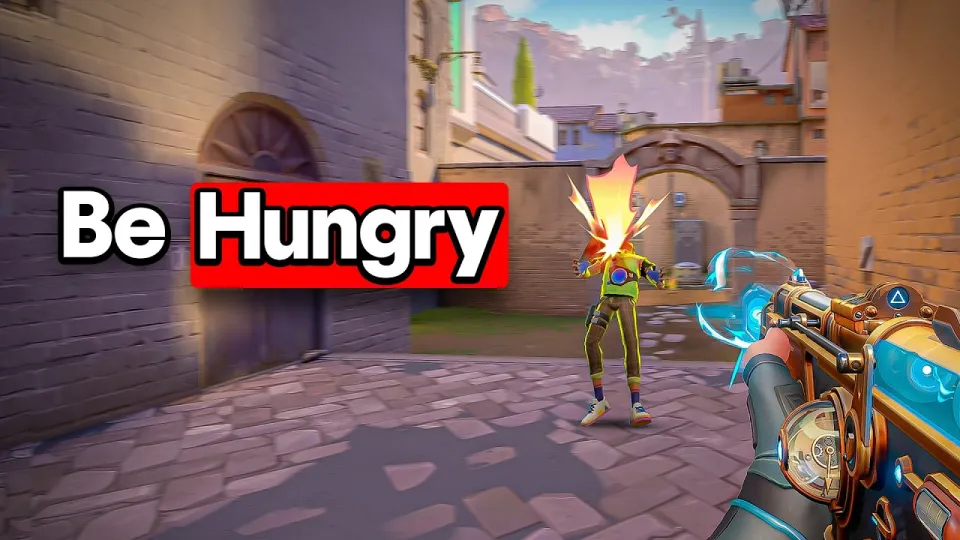
Video: How to Get So Good at Valorant it Feels Like Smurfing
Want articles like this for your own video to promote it on YouTube and Google? Order them through the Telegram bot @sat_sit_bot. The bot writes and publishes the articles itself (with your YouTube video embedded) on popular topical websites (no ads). Free trial — 50 articles.
· based on the channel Konpeki
Key takeaways
- The core of smurf-like play is reacting to the enemy instead of predicting them, and staying unpredictable yourself.
- Mechanics that matter most: counter-strafing, crosshair placement at head level, and one-tap discipline.
- A simple pre-round plan beats a complicated one — pick a role, a route, and a fallback.
- Konpeki's Immortal Roadmap Program promises 5 divisions in 10 weeks with a free call to apply.
- Console players can also get coaching; the same fundamentals apply on PS5 and Xbox.
Getting so good at Valorant that it feels like smurfing comes down to one habit: react to what the enemy actually does instead of predicting it, and make yourself hard to predict in return. That single shift, backed by clean movement and crosshair placement, is what separates players who climb from players who stall. If you want a structured path, Konpeki's Immortal Roadmap Program offers a free call to see if you're a fit for 5 divisions in 10 weeks.
Why reacting beats predicting in Valorant
Most players below Immortal lose fights because they commit to a guess before the enemy commits to anything. You peek a corner expecting the enemy to be wide, they're tight; you pre-aim a common angle, they swing from an off-angle. The fix is not more game sense — it's giving yourself time to react.
- Hold angles you can fall back from. If you're holding a long angle with no cover, you're forced to guess. Hold from a position where you can strafe back into safety after the first shot.
- Let the enemy make the first mistake. In a 1v1 post-plant, don't dry-peek. Use utility, play time, and force them to clear you.
- React to sound and minimap, not to your own plan. Your plan gets you into position; after that, the information decides.
This is also why smurfs look so calm. They aren't reading minds — they're processing what's on screen a half-second faster because they aren't locked into a prediction.
Movement fundamentals that make you look like a smurf
Movement is the most underrated skill in Valorant. Aim gets the credit, but counter-strafing and peeking discipline decide most duels.
- Counter-strafe before every shot. When you strafe left with A, tap D to stop, then fire. Your first bullet is accurate the moment your velocity hits zero.
- Peek with intent. Jiggle-peek for information, wide-swing when you have utility or a trade behind you, and never walk-peek an angle you haven't cleared.
- Practice in the Range with movement error on. Set the movement error multiplier to 0.5 and strafe between shots — one tap left, one tap right. This builds the stop-and-shoot rhythm that carries into matches.
- Use A-D-A strafing in duels. Don't hold a single direction. Change direction, fire on the stop, change again. It makes you a harder target and forces the enemy to track.
The question of whether to stop fully or keep moving between shots has a simple answer: fire only when your movement has stopped, even if it's a fraction of a second. The rhythm is strafe, stop, shot, strafe.
Crosshair placement and one-tap discipline
Crosshair placement is free aim. If your crosshair is already at head level when you turn a corner, you only need to make a small correction instead of a large one.
- Keep the crosshair at head height at all times. Not on the floor, not on the wall — at the level where a head would appear.
- Pre-aim common angles, but don't pre-fire them. Pre-firing gives away your position and commits you to a guess.
- One-tap when possible, spray when necessary. At close range, spraying is fine. At mid-to-long range, burst and reset.
- Use the Guardian and Sheriff in deathmatch. These force you to hit the first bullet instead of relying on spray.
If your crosshair placement is clean, you'll win duels you didn't even realize you were losing before.
Building a simple plan every round
A simple plan beats a complicated one. Before the round starts, answer three questions: where am I going, what am I doing when I get there, and where do I fall back to if it goes wrong.
- Pick a role for the round. Entry, trade, lurk, or anchor. Know which one you are.
- Pick a route. One path in, one path out. Don't improvise mid-round unless the information changes.
- Pick a fallback. If the site is stacked, where do you rotate? If your entry dies, do you trade or reset?
This is the same approach athletes use: a game plan that survives contact with the opponent. It's not about being rigid — it's about having a default so you're not deciding everything from scratch under pressure.
Common questions from players trying to climb
Players ask a lot of the same things when they're stuck. Here are the ones that come up most.
- "Do I need to be a certain age to get coaching?" No. Coaching programs work with players of all ages; what matters is your willingness to review your own gameplay.
- "Can I get coached on console?" Yes. Valorant on PS5 and Xbox uses the same fundamentals — crosshair placement, movement, and decision-making. The input differs, the concepts don't.
- "I'm a beginner — what should I do first?" Focus on one thing at a time. Pick crosshair placement for a week, then movement, then utility usage. Trying to fix everything at once fixes nothing.
- "Why do my teammates feel like bots?" Sometimes they are having a bad game. You can't control that. You can control your own impact: play your life, trade when possible, and don't tilt into bad decisions.
- "How do I stay unpredictable?" Change your timing. If you always peek early, peek late. If you always play the same site, rotate. Predictability is what gets you read.
Useful links
- Immortal Roadmap Program application: https://roadmap.gg/v/lUfrMRb74SE
- Free coaching resources and office hours on Discord: https://www.discord.gg/UnRETVmRpV
- Konpeki on Twitch: https://www.twitch.tv/konpekichan
- Konpeki on Twitter: https://twitter.com/coachpeki
- Konpeki on TikTok: https://www.tiktok.com/@coachpeki
Final thoughts on playing like a smurf
Getting so good at Valorant that it feels like smurfing isn't about a secret trick — it's about reacting instead of predicting, moving with purpose, and keeping your crosshair where it needs to be. Konpeki's breakdown makes the point clearly: the players who climb are the ones who make the game simple for themselves and complicated for everyone else. If you want a structured path to that level, the Immortal Roadmap Program is the place to start — book a free call and see if it's a fit. The channel Konpeki is the source for this approach, and the Discord is where you can ask follow-up questions directly.
Source: How to Get So Good at Valorant it Feels Like Smurfing · Markdown version
Questions & answers
What does it mean to play like a smurf in Valorant?
Playing like a smurf means you consistently win duels and make decisions that look a tier above your rank. It comes from reacting to the enemy instead of predicting them, keeping your crosshair at head level, and using movement to stay unpredictable. It's not about a secret trick — it's about fundamentals executed cleanly.
How do I practice counter-strafing effectively?
Go into the Range and turn movement error on, then set the multiplier to 0.5. Strafe left and right with A and D, firing one shot each time you stop. The goal is to build the rhythm of strafe, stop, shot. Once it feels natural, take it into deathmatch and focus only on stopping before you fire.
Can console players use the same advice?
Yes. The core concepts — crosshair placement, movement discipline, and decision-making — apply on PS5 and Xbox just as they do on PC. The input method changes, but the way you approach a duel and a round does not. Coaching programs like Konpeki's work with console players too.
How long does it take to rank up with this approach?
It depends on how consistently you apply the fundamentals and review your own gameplay. Konpeki's Immortal Roadmap Program advertises 5 divisions in 10 weeks with guaranteed results, which gives you a rough benchmark. Without a structured plan, most players see gradual improvement over a few months.